
Groom Sherwani for Men Wedding – Embroidered, Jodhpuri & Indo-Western Designs
Price Filter
Showing 1–60 of 465 resultsSorted by latest
-

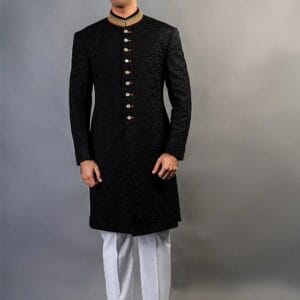
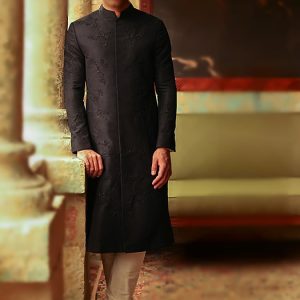
Fully embroidered sherwani for groom in black raw silk fabric, features embroidery on collar and gold fancy buttons with red contrast buttonholes, comes with offwhite kurta pajama
$439.95 -
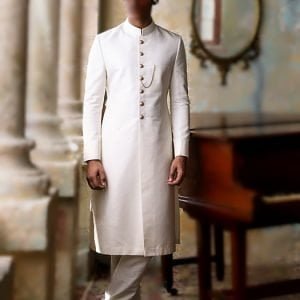
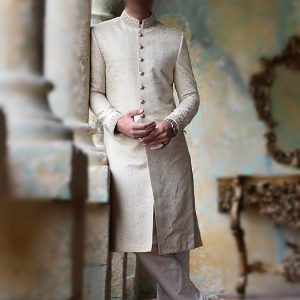
Fully embroidered sherwani for dulha in offwhite raw silk fabric and with golden buttons, comes with kurta pajama in offwhite color
$439.95 -
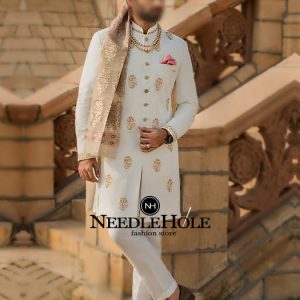
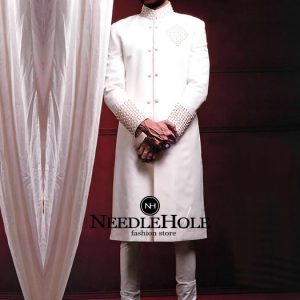
Simple sherwani for dulha in offwhite raw silk fabric and with golden buttons, comes with kurta pajama in offwhite color
$199.95 -
Traditional wedding sherwani for dulha in offwhite suiting fabric and with golden buttons, comes with kurta pajama in offwhite color
$399.95 -
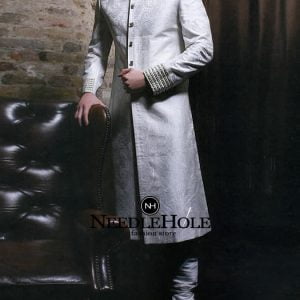
Ultimate wedding sherwani for dulha in ivory jamawar fabric, comes with kurta pajama in offwhite color
$399.95 -
Traditional embroidered wedding sherwani for dulha in offwhite raw silk fabric, comes with kurta pajama in offwhite color
$679.95 -
Stunning fully embroidered wedding sherwani for dulha in offwhite raw silk fabric and gold buttons, comes with kurta pajama in offwhite color
$439.95 -
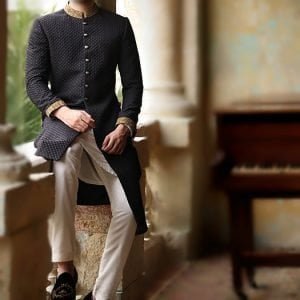
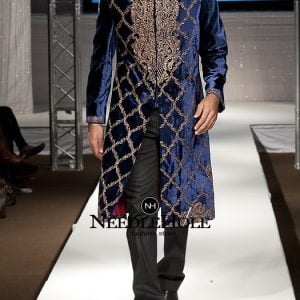
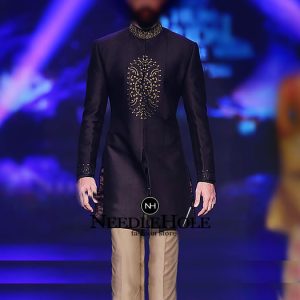
Glorious embroidered wedding sherwani for dulha in dark blue raw silk fabric, comes with kurta pajama in offwhite color
$639.95 -
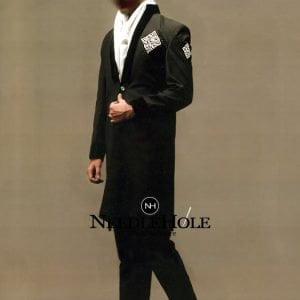
Gorgeous embroidered men sherwani for groom wedding in black raw silk fabric, comes with kurta pajama in offwhite color
$599.95 -
Fully embroidered men sherwani for groom wedding in black raw silk fabric, comes with kurta pajama in offwhite color
$439.95 -
Ideal men sherwani for groom wedding in black raw silk fabric, comes with kurta pajama in offwhite color
$439.95 -
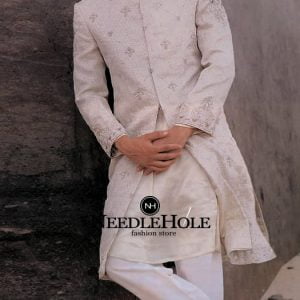
Fully embroidered men sherwani for groom wedding in offwhite raw silk fabric, comes with kurta pajama in offwhite color
$439.95 -
Raw silk men sherwani for groom wedding in moss green color, comes with kurta pajama in offwhite color
$639.95 -
Jamawar men sherwani for groom wedding in ivory color and with gold buttons, comes with kurta pajama in offwhite color
$399.95 -
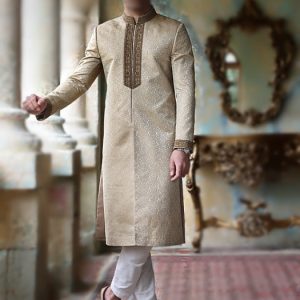
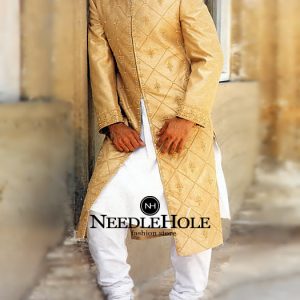
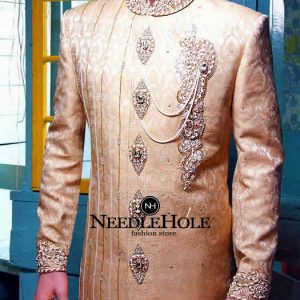
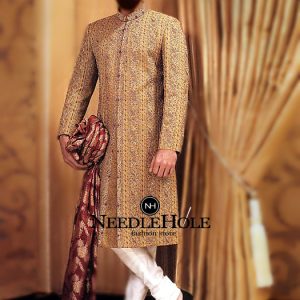
Jamawar men sherwani for groom wedding in golden color, comes with kurta pajama in offwhite color
$399.95 -
Jamawar groom sherwani for men wedding in ivory color and with gold buttons, comes with kurta pajama in offwhite color
$399.95 -
Fully embroidered groom sherwani for men wedding in black color raw silk fabric, comes with kurta pajama in offwhite color
$439.95 -
Fully embroidered groom sherwani for men wedding with golden buttons in black color raw silk fabric, comes with kurta pajama in offwhite color
$439.95 -
Black fully embroidered groom sherwani for men wedding in raw silk fabric, comes with kurta pajama in offwhite color
$595.95 -
Black embroidered groom sherwani for men wedding in suiting fabric, comes with kurta pajama in offwhite color
$719.95 -
Black thread embroidered groom sherwani for men wedding with gold buttons, comes with kurta pajama in offwhite color
$439.95 -
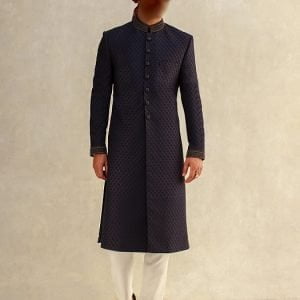
Navy blue thread embroidered groom sherwani for men wedding in raw silk fabric, comes with kurta pajama in offwhite color
$439.95 -
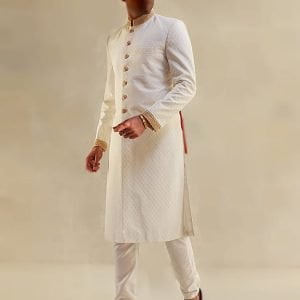
Offwhite thread embroidered groom sherwani for men wedding in raw silk fabric, comes with kurta pajama in offwhite color
$439.95 -
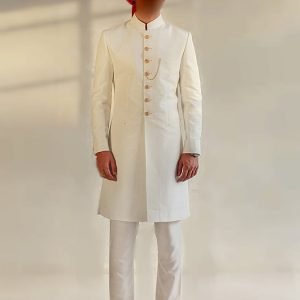
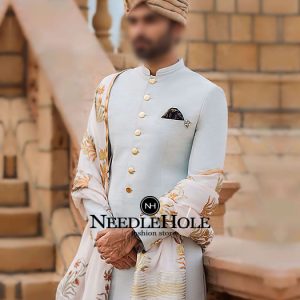
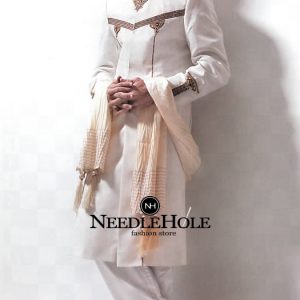
Stunning offwhite simple sherwani for men wedding with golden buttons
$199.95 -
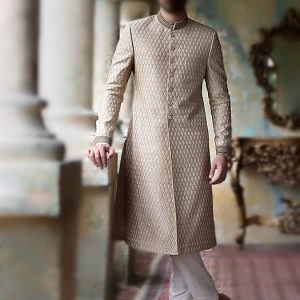
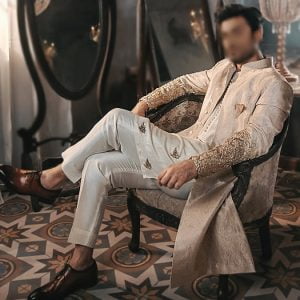
Champagne groom sherwani for men wedding, delicate thread embroidered sherwani with kurta pajama in off white color
$439.95 -
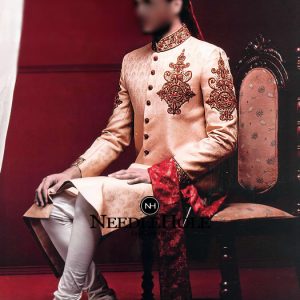
T-pink jamawar sherwani for men wedding, embellishment sleeves on sherwani with kurta pajama for your big day
$439.95 -
Off white sherwani with pajama and kurta, Raw silk sherwani with delicate embroidered collar and fancy gold buttons on front
$239.95 -
Royal look off white sherwani design in raw silk with pajama and kurta
$383.95 -
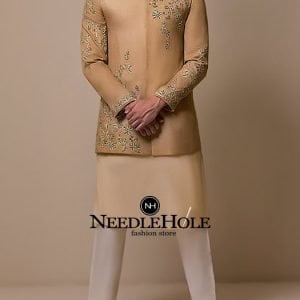
Embroidered earth yellow short sherwani design with pajama and kurta
$335.95 -
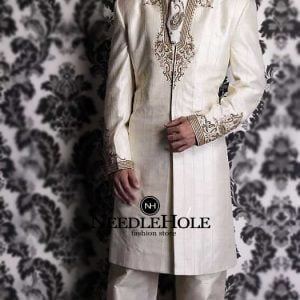
Embroidered collar off white groom sherwani design with pajama and kurta
$239.95 -
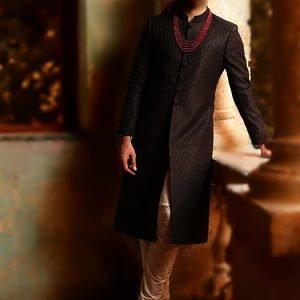
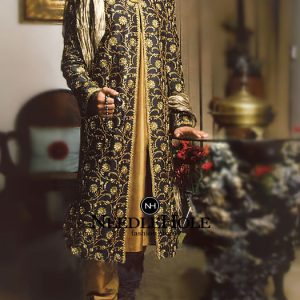
Heavy embellished black sherwani for groom, Front open sherwani design with churidar pajama and kurta in golden color
$671.95 -
Fitted sleeves double layered wedding sherwani for groom with churidar pajama
$479.95 -
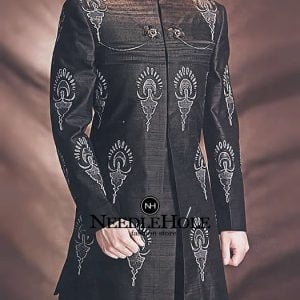
Short length groom sherwani for wedding with pajama in black color featured with large size embroidered motif all over the front and sleeves
$383.95 -
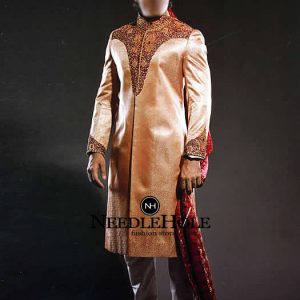
Designer jamawar gold groom sherwani for men with pajama featured embellishment on collar, front and sleeves cuff
$431.95 -
V-neck style designer striped sherwani for groom in off white raw silk fabric with embroidery on collar, neck and sleeves cuff
$431.95 -
Designer jamawar off white groom sherwani churidar pajama with embroidered collar and sleeves cuff
$287.95 -
Designer jamawar off white groom sherwani with churidar pajama
$431.95 -
Designer jamawar golden groom sherwani with churidar pajama and embroidered collar, sleeves and front
$479.95 -
Designer off white groom sherwani with baggy pants and with embroidered collar, around neck, chest and sleeves
$431.95 -
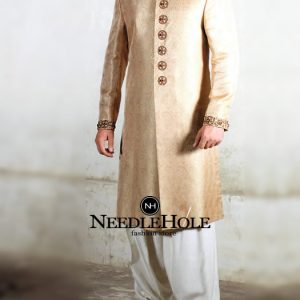
Designer jamawar golden sherwani with salwar and circular motifs embroidery on collar, sleeves and buttons
$383.95 -
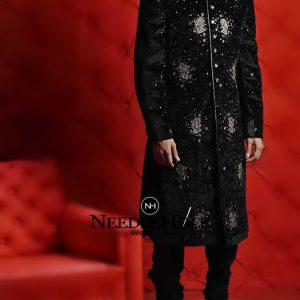
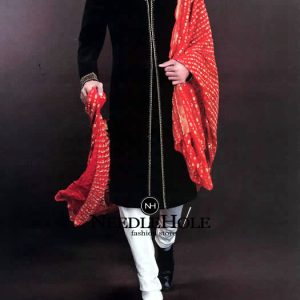
Designer groom sherwani in black velvet with churidar pajama and embroidery
$431.95 -
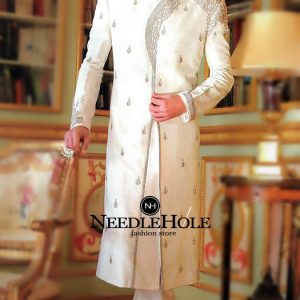
Asymmetrical front style off white groom sherwani with kurta pajama and embroidery
$479.95 -
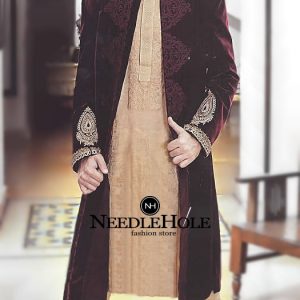
Dashing front open groom sherwani in maroon color with kurta pajama and embroidery
$431.95 -
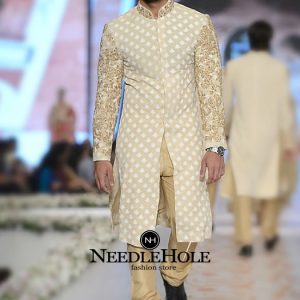
Jamawar off white and golden sherwani for groom with embellishment on the collar, front and sleeves
$431.95 -
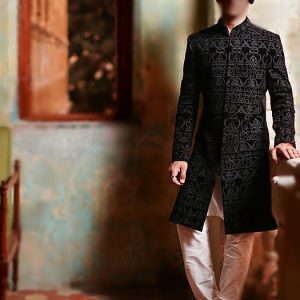
Front open groom sherwani in black velvet with kurta and pajama
$335.95 -
Front open groom sherwani in off white raw silk with off white kurta shalwar
$575.95 -
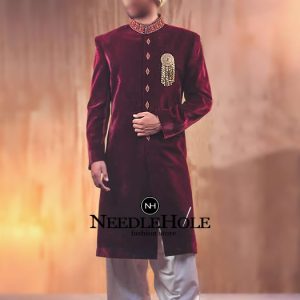
Velvet dark red groom sherwani with embroidery on collar and sleeeves
$268.95 -
Embroidered front open style velvet dark blue sherwani with black kurta pajama
$431.95 -
Embroidered velvet maroon sherwani with off white shalwar
$259.95 -
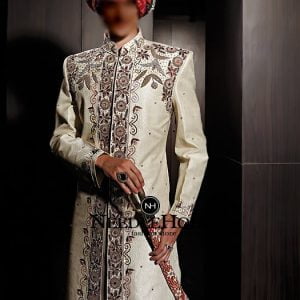
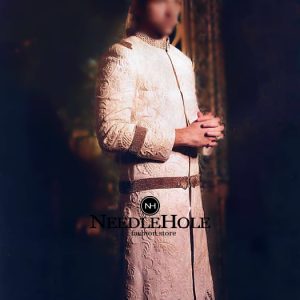
Fully embroidered off white jamawar groom sherwani with kurta shalwar
$575.95 -
Front open style jamawar gold sherwani with off white churidar pajama
$575.95 -
Front open V neck sherwani with pajama in black suiting fabric
$335.95 -
Fully embroidered royal golden sherwani with churidar pajama for groom in raw silk fabric
$767.95 -
Peach gold sherwani with churidar pajama for groom in jamawar fabric
$431.95 -
Awesome black sherwani with churidar pajama for groom in jamawar fabric
$479.95 -
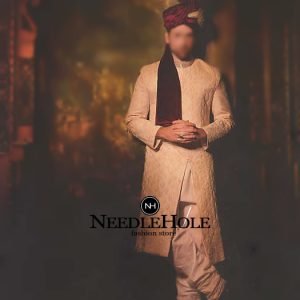
Off white raw silk sherwani with churidar pajama for groom
$335.95 -
Navy blue short length sherwani for groom in raw silk fabric
$335.95 -
Beautiful cream fully embroidered sherwani for groom in raw silk fabric
$527.95 -
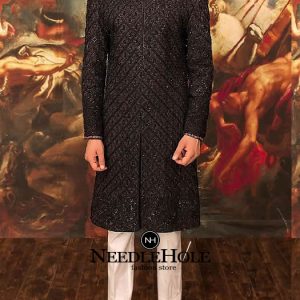
Handsome black fully embroidered sherwani for groom in jamawar fabric
$863.95 -
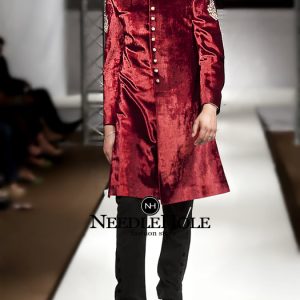
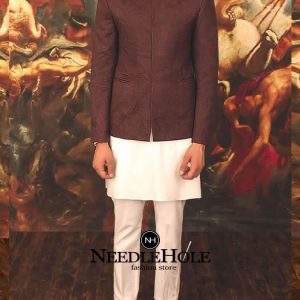
Maroon short length sherwani jacket for groom with embroidered collar and three pockets
$268.95









Learn About the Groom Sherwani
In this guide, you will learn about sherwani styles, fabrics, weather suitability, sizing and fit, colors, styling, the culture behind this garment, the events where you can wear it, who can wear it, and how custom and bespoke ordering works. By the end, you will know how to choose a Groom Sherwani that suits your wedding, your climate and your taste.
Sherwani Styles: What Are Your Options?
Four main styles cover most grooms’ choices, and each gives a different look.
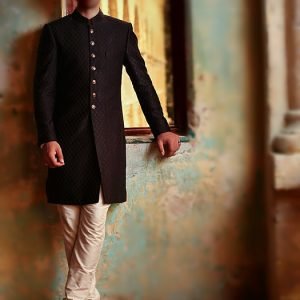
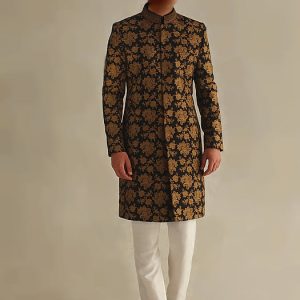
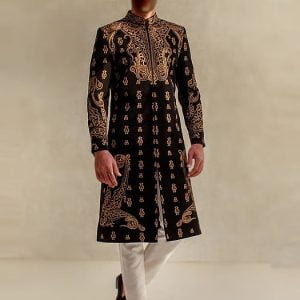
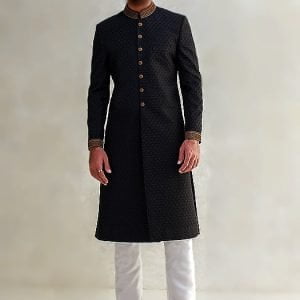
- Embroidered sherwani: carries detailed work on the collar, front and cuffs. It is a natural choice for a groom because it looks rich in person and in photographs.
- Jodhpuri sherwani: cut close to the body with a structured, Bandhgala-style collar. It gives a sharp, tailored line.
- Indo-Western sherwani: mixes traditional detail with a modern silhouette. It suits grooms who want a fresh look without losing the sherwani character.
- Achkan: a long, fitted coat that is closely related to the sherwani. Many people use the two names for similar garments, which is why you will see both on this page.
Knowing these differences helps you pick a design that matches your taste and your wedding theme.
Dhoti sherwanis and Punjabi style sherwanis are also made to order. Share the design you have in mind, and we will make it to your measurements.
Which Sherwani Fabric Should You Choose?
Fabric changes how a sherwani looks, feels and drapes, so decide on it early.
- Silk: a smooth, polished finish with a soft sheen.
- Velvet: adds richness and warmth, and looks striking at evening events.
- Brocade and jamawar: woven patterns that give depth without extra embroidery.
- Wool: offers structure and a firm, clean fall.
A good fabric also holds embroidery well, so the detailing stays crisp through a long event.
Which Sherwani Suits Hot or Cold Weather?
Different fabrics suit different seasons. Lighter silk and suiting fabrics work well for warm weather, while velvet, jamawar and wool are better for cooler months. Lining and weight matter too: a lighter lining keeps you comfortable at a summer wedding, while a heavier fabric adds warmth for a winter one. Matching fabric to weather keeps you comfortable through a long event, so you can enjoy the day instead of thinking about the heat or the cold.
Browse the sherwanis above to find the fabric and color that suit your wedding season.
Sizing and Fit: How Should a Groom Sherwani Fit?
A well-fitted sherwani has shoulders that sit flat without pulling, a chest that allows easy movement, and a length that usually falls somewhere between the knee and mid-thigh. For a custom order, our Measurement Guide shows you how to take each measurement correctly, and you can also pick a standard size from the Size Chart. A correct fit matters most for a groom, because you will be sitting, standing, and posing for photographs for hours.
Colors: Which Sherwani Color Suits Your Wedding?
Color changes the look of the outfit. Offwhite, ivory and cream give a classic, refined look and photograph well. Black is bold and formal, especially for evening events. Navy sits between the two and works in most seasons. Maroon, red and gold bring a royal, festive feel, and green shades such as dark green and emerald give a rich, distinctive look. Gold detailing, such as buttons or collar embroidery, adds richness to any base color. When choosing, think about your skin tone, the time of day, the venue and the color theme of the wedding.
Styling: What Do You Wear With a Sherwani?
A sherwani is commonly paired with kurta pajama, kurta churidar pajama or shalwar kameez, and with us you get your choice of one of these included with your sherwani, in any color you like. Many grooms add a shawl or a safa (turban) for the main ceremony, along with traditional footwear. A simple rule is to let one piece take the focus: if the sherwani is heavily embroidered, keep the accessories understated.
Explore our Kurta Shalwar, Turban, Khussa and Groom Shawl collections to complete your sherwani look.
Where Does the Sherwani Come From?
The sherwani carries a long history. It originated in the Indian subcontinent and has long been seen as a symbol of nobility and elegance in South Asian culture. Traditionally it was made from heavier fabrics such as silk, brocade, velvet, jamawar or wool, and decorated with intricate embroidery. Today it is the most recognised formal outfit for grooms, and many families choose it because it connects the wedding to tradition.
Which Events Can You Wear a Sherwani To?
A sherwani is not limited to the wedding day. It suits many occasions:
• Nikah and Walima: a lighter color such as offwhite or cream suits the ceremony and the daytime feel.
• Barat and Reception: richer fabrics and heavier embroidery suit the main celebration.
• Engagements and family functions: a simpler sherwani works well for guests and relatives.
• Festivals and formal celebrations: the sherwani is a dressy option for Eid and other special days.
A well-chosen sherwani can be worn again, so it is a good investment beyond a single event.
Who Can Wear a Sherwani?
Anyone. The sherwani is not tied to one community or one country. Muslim, Hindu, American, British, African and Arab men all wear sherwanis to weddings and formal events. If you want a distinctive, elegant outfit for your own celebration, the sherwani works for you wherever you live, and a custom fit makes it comfortable for any body type.
Custom and Bespoke Sherwani Orders
A ready-made sherwani fits a standard size, while a custom one is made for you. A custom sherwani is tailored to your measurements, so the shoulders, chest, waist and length fit your body. Bespoke tailoring goes one step further: every sherwani can be made in any color and any fabric, and the embroidery, style and fit can be customised too, so the outfit reflects your own taste. The result is a Groom Sherwani made for you, not picked off a rack, and it is the best way to get a perfect fit for a day that will be photographed again and again.
Pick your design above, then choose your size or Custom Body Measurements on the product page.
How the Custom Order Process Works
Ordering takes four simple steps, from design to delivery:
- Choose your sherwani design, fabric and color, and custom embroidery if you want it. Pick one included outfit to go with it: shalwar kameez, kurta pajama or kurta churidar pajama, in any color.
- Select your size on the product page. Choose a standard size (the Size Chart is at the bottom of the page), or select Custom Body Measurements, download the Measurement Guide, take your measurements as shown and email or WhatsApp them to us.
- Your outfit is tailored to those measurements.
- It is shipped to your door anywhere in the world.
Swift Delivery Worldwide
Once your order is confirmed, your sherwani is tailored and shipped to your door anywhere in the world, with swift delivery so your outfit reaches you in time for your event. If you need your outfit by a specific date, contact us by WhatsApp, phone or email before you order and share your event date. If you need urgent delivery, we will tell you whether it is possible. If you do not ask beforehand, the normal delivery time is stated in the confirmation email we send after your size or measurements and customization details are confirmed, before the order process begins.
Care and Storage: How to Look After Your Sherwani
Heavy embroidered fabric needs gentle handling. Dry clean rather than wash at home, store the sherwani on a padded hanger inside a breathable garment bag, and keep it away from damp and direct sunlight. Avoid pressing hot irons directly on embroidery or buttons. With proper care, your sherwani can be worn again at other celebrations.